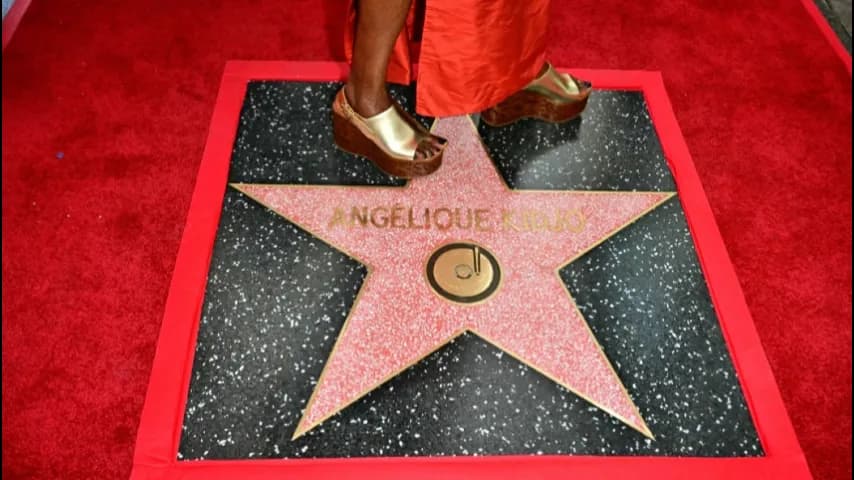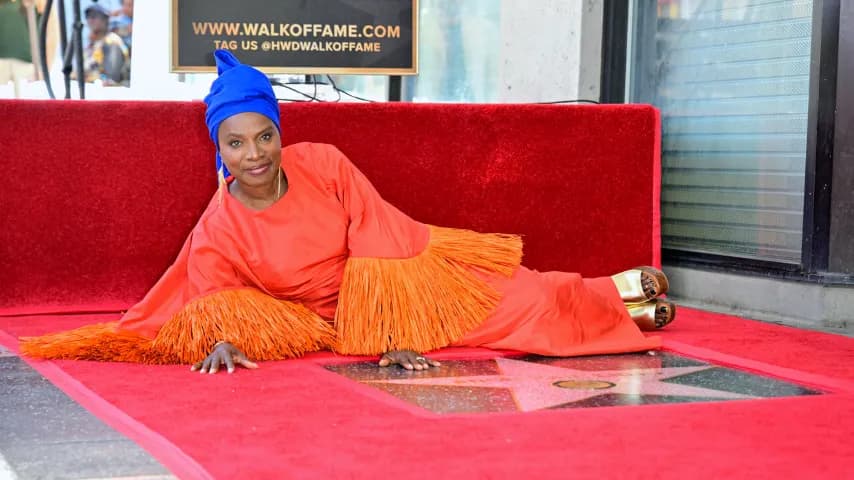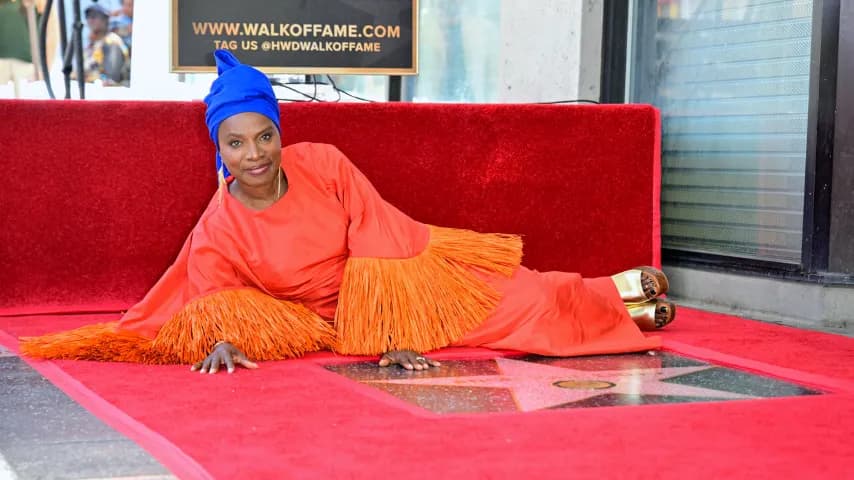
Yesterday, under the palm trees of Hollywood Boulevard, a 66-year-old woman from Benin walked up to a star on the ground the 2,854th star on the Hollywood Walk of Fame and saw her name on it.
Angélique Kidjo became the first Black African to be honored with a star on the Hollywood Walk of Fame. Five Grammys. Eighteen albums. Four decades of performing. And she is the first.
Not the first African woman. The first African. Period.
Let that take a moment to land.
Who is Angélique Kidjo and why does this matter?
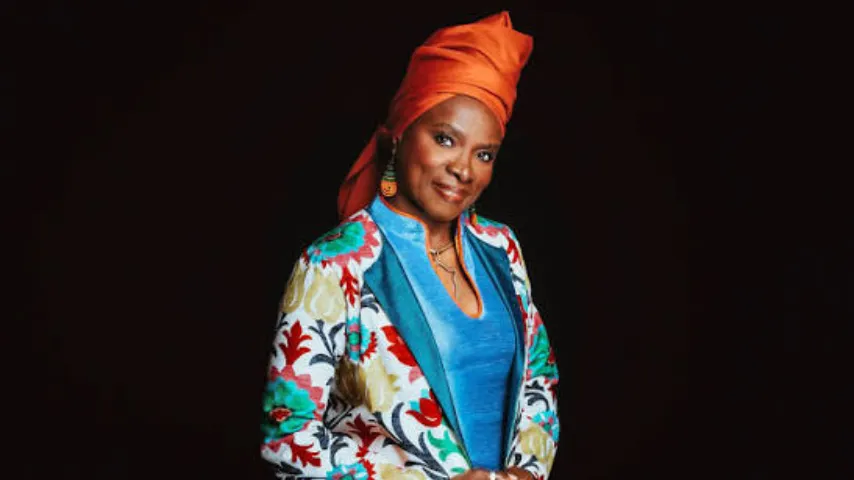
If you don't know Angélique Kidjo, you've been missing one of the most important voices in global music for forty years.
Born in Benin, she has built a career as a singer, songwriter, actress and activist that has spanned more than four decades. She has sold nearly four million albums worldwide and written a bestselling autobiography with a foreword by Desmond Tutu.
She has been named one of Time magazine's 100 most influential people in the world. The BBC listed her among Africa's 50 most iconic figures. The Guardian called her one of the 100 most inspiring people on the planet.
And yet until yesterday not a single African musician had a star on Hollywood Boulevard.
Not Miriam Makeba. Not Youssou N'Dour. Not Fela Kuti. Not Hugh Masekela. Not Salif Keita. Not Oliver Mtukudzi. Not a single one of the artists who shaped the DNA of global music from the African continent.
Angélique Kidjo is the first.
What she said yesterday.
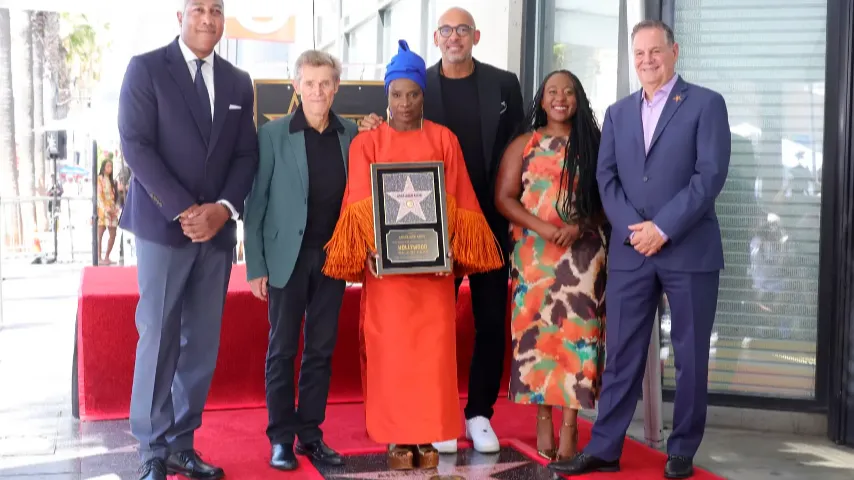
At the ceremony, surrounded by Willem Dafoe, Recording Academy CEO Harvey Mason Jr., Djimon Hounsou, and Nigerian star Adekunle Gold, Kidjo spoke.
And what she said was not a rehearsed acceptance speech. It was a declaration.
"We Africans don't know what we've given to the world. Without us, there's no music possible on this planet."
Then she erupted into song. In the middle of Hollywood Boulevard. Under the palm trees. In front of the cameras. Because that's who Angélique Kidjo is someone for whom music isn't a performance, it's a language she speaks when words aren't enough.