NBC News dropped an exclusive report tonight with videos and photos. And I can't stop thinking about it.
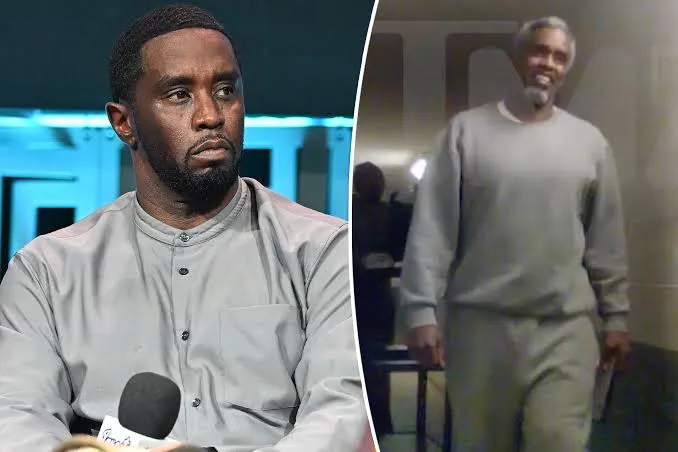
Sean "Diddy" Combs is at FCI Fort Dix, a federal correctional institution in New Jersey. He was convicted in July on two counts of transportation to engage in prostitution. His projected release date is May 2028.
And according to what NBC News documented tonight, here is what his daily life looks like inside that prison.
He pays other inmates thousands of dollars a month to cook his meals, make his bed, clean his cell, do his laundry, and give him Chinese massages.
He has a contraband smartphone on which he receives nude photos from a former girlfriend.
He drinks Hennessy. In prison. Illegally.
He takes Remeron an antidepressant with euphoric side effects without a prescription.
One former inmate who witnessed all of this described it in the most honest sentence I've heard about American justice in a long time: "This is not some normal shit you see in jail. This is some rich shit."
His attorney responded with something equally revealing. He called it "ordinary prison life characterized as news."
Ordinary.
Two justice systems. One country.

Let me tell you about what ordinary prison life actually looks like for people who aren't Sean Combs.
Ordinary prison life is sleeping in a room with 50 strangers. It's eating whatever the institution decides to serve that day. It's making $0.23 an hour doing mandatory work assignments. It's having one fifteen-minute phone call per week on a monitored landline.
Ordinary prison life is not having personal chefs. It's not receiving nude photos on a private smartphone. It's not drinking cognac. It's not getting massages.
What Diddy has isn't ordinary. It's what happens when extreme wealth collides with a system that was never designed to treat everyone the same and doesn't pretend to.
The attorney's response is the whole story.

I want to come back to that statement from his legal team, because I think it's the most important thing in this entire story.
"Ordinary prison life characterized as news."
Think about what that sentence is doing. It's not denying the facts. It's not saying these things didn't happen. It's saying: so what? It's saying: this is just what happens, why are you surprised?
And the honest answer is they're not entirely wrong. This is what happens. This is what has always happened. When you have enough money, the walls of a prison become a different kind of wall than they are for everyone else.
The justice system has always had two tracks. The track for people who can afford the best lawyers, the best connections, the best everything. And the track for everyone else.
Diddy didn't create that system. He's just living in it. Very, very comfortably.
What this says about who we punish and how.
There's a man in an American prison right now serving ten years for a non-violent drug offense. He eats what he's given. He sleeps where he's told. He works for cents per hour. He doesn't have a smartphone or Hennessy or anyone to make his bed.
He didn't traffic anyone. He didn't run what federal prosecutors described as a criminal enterprise spanning decades. He just got caught with the wrong substance at the wrong time.
The gap between his experience and Diddy's isn't a glitch in the system. It's the system working exactly as designed.
Money buys comfort everywhere. In hotels, in hospitals, in courts and apparently in federal prison cells in New Jersey, too. What changes when you're rich isn't the sentence on paper. It's what the sentence actually feels like to live.
The contraband is almost beside the point.

Yes, the smuggled phone is illegal. The Hennessy is illegal. The unprescribed medication is illegal. These are violations of prison rules that could result in disciplinary action and reportedly already have, with previous infractions extending his sentence.
But the part that actually bothers me isn't the contraband.
It's the massages.
It's the fact that other inmates people with no money, people who have nothing are being paid to serve him. Inside a prison. That the power dynamic he allegedly operated in the outside world has simply been replicated, at a smaller scale, behind bars.
He came to prison and immediately rebuilt a version of his life. Complete with staff.
That's not just wealth. That's something else.
His attorney isn't wrong. That's what makes this so hard.
Here's the uncomfortable truth I keep circling back to.
His attorney said this is ordinary. And in one sense in the sense that rich people have always found ways to make their prison stays more comfortable he's right. This is how it has always worked.
The outrage isn't that Diddy specifically found a way to live well in prison. The outrage is that we've built a justice system where living well in prison is even possible if you can pay for it.
Until we're as angry about the man serving a decade for a nonviolent offense eating institutional food as we are about Diddy drinking Hennessy, we're not really angry about justice.
We're just angry about Diddy.
And those are two very different things.
Christ-Yvan 🛶