It's happening again.
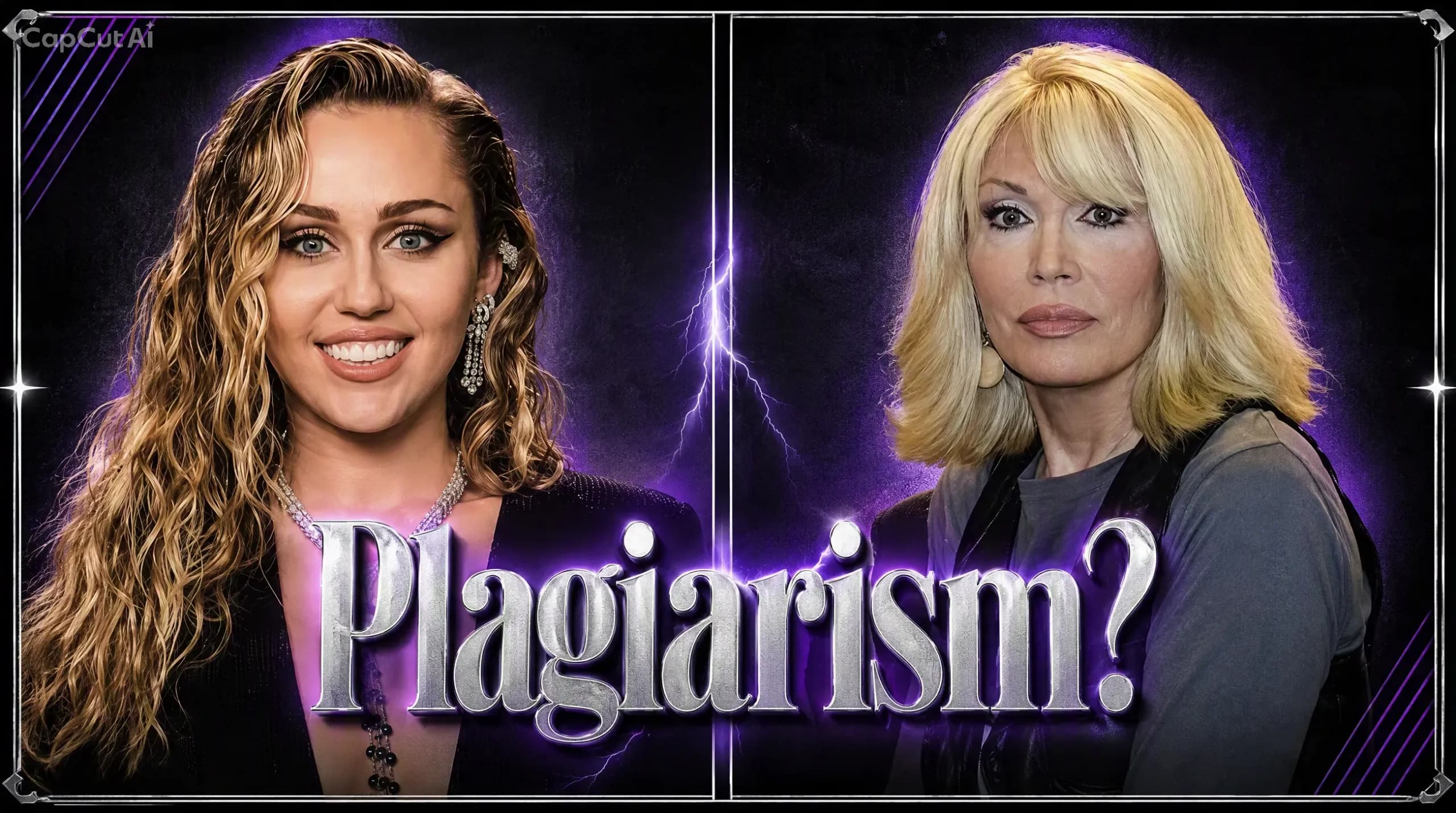
This week, Amanda Lear the French disco icon who gave the world "The Sphinx" back in 1979 posted something on Instagram that the music world couldn't ignore.
"Thank you Miley for copying my song The Sphinx. I'm flattered."
The accusation? That Miley Cyrus's brand new single "Redlights" shares the same melody and rhythmic structure as a track recorded nearly 50 years ago. Amanda Lear added that she might pursue legal action or simply ask to be credited. She wasn't furious. She was almost gracious about it, which somehow made the whole thing hit harder.
And just like that, a conversation the music industry has been trying to avoid for years landed right back on the table.
Because this isn't the first time. Not even close.
We've been here before with Miley.

In 2023, Miley Cyrus released "Flowers." It became the best-selling single of that year. It topped the Billboard Hot 100 for eight weeks. It won her two Grammy Awards, including Record of the Year.
And within days of its release, the internet noticed something. The chord progression, the melodic structure, the lyrical DNA it all sounded strikingly familiar to Bruno Mars's "When I Was Your Man" from 2013.
Tempo Music Investments which owns a portion of the copyright to the Mars track filed a lawsuit in federal court in Los Angeles, claiming that "Flowers duplicates numerous melodic, harmonic, and lyrical elements" of the original song. The co-authors of "Flowers" denied copying it. The case wound its way through the legal system.
And now, before that chapter is fully closed, a new one opens. Amanda Lear. "The Sphinx." 1979.
So where exactly does inspiration end and theft begin?

This is the question nobody in the music industry wants to answer honestly because the honest answer is uncomfortable.
The truth is that almost all music borrows from what came before. Always has. Always will.
The blues that built rock and roll was built on African musical traditions. Elvis borrowed from Black artists. Led Zeppelin borrowed extensively, and sometimes without credit from blues musicians like Willie Dixon and Robert Johnson. Vanilla Ice famously used the bass line from Queen and David Bowie's "Under Pressure" and insisted for years that it was different because he added a single extra note.
The law has tried to draw the line and failed repeatedly. In 2015, Robin Thicke and Pharrell Williams were ordered to pay $7.4 million to Marvin Gaye's estate because "Blurred Lines" evoked the feel of "Got to Give It Up." Not the same notes. Not the same chords. The same vibe. The court ruled that a feeling could be owned.
That ruling terrified the music industry and for good reason. If you can copyright a mood, then nobody is safe.
The Miley pattern coincidence or habit?
Here's where I want to be fair, because fairness matters.
"Flowers" was deliberately written in conversation with "When I Was Your Man." Miley Cyrus was famously divorcing Liam Hemsworth at the time. The lyrical response "I can buy myself flowers" as an answer to "I should have bought you flowers" was clearly intentional. Whether that intentional emotional response crossed into unauthorized musical copying is a legal question, not a moral one.
The Amanda Lear situation is different. There's no obvious emotional connection between Miley Cyrus and "The Sphinx." If the melodic similarity is as close as Lear claims and she has 50 years of experience in the music industry, so she knows what she's hearing then the more likely explanation is that a songwriter working on "Redlights" heard "The Sphinx" at some point, consciously or not, and it worked its way into the new song without anyone noticing.
That's called cryptomnesia when you forget you've heard something and later believe you created it yourself. George Harrison was sued for it with "My Sweet Lord." He didn't mean to copy "He's So Fine" by The Chiffons. The court found he had done it unconsciously. He still had to pay.
Intent doesn't always matter. Impact does.
Amanda Lear's reaction tells you everything.

The most interesting thing about this whole story isn't the accusation. It's the tone.
Amanda Lear didn't call Miley Cyrus a thief. She said she was flattered. She talked about wanting to be credited, or perhaps pursuing legal options but the word she used first was "flattered."
That's the perspective of someone who understands how music actually works. Who knows that her 1979 disco track influencing a 2026 pop song is, in some ways, a tribute to the staying power of what she created. Who isn't interested in destroying a younger artist just in being acknowledged.
That's maturity. That's the way this conversation should be had more often.
The real question music needs to answer.
We talk about plagiarism in music as though there's a clean legal answer waiting somewhere. There isn't.
Every song exists in conversation with every song that came before it. The 12-bar blues has been used millions of times and nobody owns it. The four-chord progression that powers half of pop music has been played by everyone from The Beatles to Beyoncé. Trap beats, lo-fi, hyperpop every genre is built on shared vocabulary.
The difference between homage and theft is largely a question of degree, credit, and money. When you borrow consciously and acknowledge it, it's a tribute. When you borrow and profit without acknowledgment, it becomes something else.
Miley Cyrus has now faced this question twice in three years. Whether she answers it with a lawsuit, a credit, or silence will say something about her and about an industry that has always found it easier to monetize the past than to honor it.
Amanda Lear is 80 years old. She made music that clearly still matters enough for someone to echo it nearly half a century later.
That's not nothing. That deserves at least a mention.
Christ-Yvan 🛶