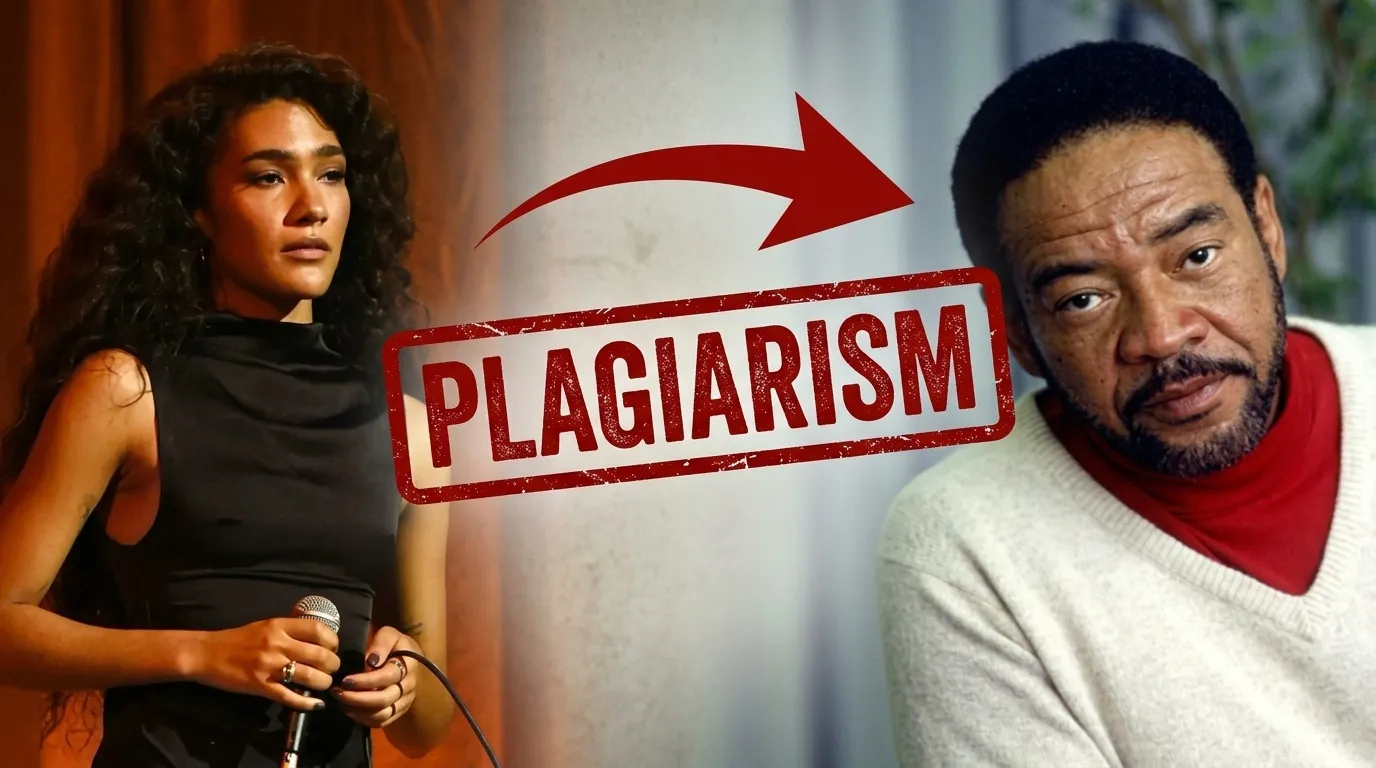
Olivia Dean just won a Grammy for Best New Artist in February. Her album The Art of Loving hit number one in the UK and number three in the US. She's 27 years old and has spent the last year becoming one of the most celebrated young artists in British music.
And now she's being sued for plagiarism.
This week, Mattie Music Group one of the publishers behind Bill Withers' back catalogue filed a federal copyright infringement lawsuit in Los Angeles. Their claim: that Dean's song "I've Seen It," the closing track of The Art of Loving, copies the melody of Withers' 1981 classic "Just the Two of Us."
The lawsuit names Capitol Records, Universal Music Group, Sony Publishing, and Kobalt as defendants. Not Olivia Dean herself. Not her co-writers Bastian Langebæk and Max Wolfgang. The labels and publishers.
Let's talk about what's actually happening here.
The facts, plainly.
Mattie Music Group hired musicologist Alexander Stewart to compare the two songs. The publisher says its representatives reached what they considered the "obvious and inescapable conclusion" that "I've Seen It" copied "Just the Two of Us" and notified all defendants in writing on August 17, 2026. musicbusinessworldwide
The lawsuit argues that the two songs "share musical features" so striking they cannot have arisen by coincidence alone. pajiba
"Just the Two of Us" was a massive hit reaching number two on the Billboard Hot 100 in 1981 and winning a Grammy for Best R&B Song. The argument is that Dean and her co-writers had a "reasonable opportunity" to have heard it before writing their own song. stereogum
Bill Withers died in 2020. He never filed this lawsuit. His publisher did four years after his death and one year after "I've Seen It" was released.
The timing tells you everything.
Let me ask a simple question. If this infringement was so "obvious and inescapable" why did it take until August 2026 to notice it?
"I've Seen It" was released in September 2025. The Art of Loving spent months climbing the charts. It went gold. It spawned top-ten hits. It won Olivia Dean a Grammy. Every music journalist, every playlist curator, every radio programmer heard it.
Nobody noticed the similarity to Bill Withers. Not publicly. Not until the album became a massive commercial success and the Grammy win made Olivia Dean exactly the kind of target worth pursuing.
As one music critic pointed out Withers' song has far more Spotify streams than "I've Seen It" but isn't a recent Grammy winner or potential new revenue source. pajiba
That sentence says everything about what this lawsuit is really about.
We've been here before. Many times.
This is not a new story. Since the Marvin Gaye estate won their landmark lawsuit against "Blurred Lines" in 2015 where Robin Thicke and Pharrell were forced to pay millions because their song evoked the feel of Gaye's music, not even the same notes — the door opened for a wave of similar cases.
Not long ago, I wrote on this blog about Miley Cyrus being accused of copying Bruno Mars, and then Amanda Lear accusing her of lifting "The Sphinx" for "Redlights." The music plagiarism machine never stops.
But the Olivia Dean case has a specific quality that bothers me more than most. Because the argument being made that she must have heard "Just the Two of Us" at some point in her life and therefore any melodic similarity constitutes copyright infringement is an argument that could be made against almost any song ever written.
Bill Withers himself was a towering figure who drew deeply from the Black musical tradition before him. "Lean on Me," "Ain't No Sunshine," "Just the Two of Us" these songs exist in conversation with decades of soul, gospel, and R&B that came before them. That's not an accusation. That's how music works.
Every artist who has ever made music that sounds like music they love is vulnerable to this logic. The question isn't whether two songs share characteristics. The question is where inspiration ends and theft begins. And nobody not the courts, not the musicologists, not the publishers has ever given a satisfying answer.
The publisher vs. the artist.
Here's what I keep coming back to. Olivia Dean is not the defendant. She is not being sued personally. The lawsuit targets her label, her publisher, and the corporations that distributed her music.
But she is the one whose name is in every headline. She is the one whose Grammy win now has an asterisk in the public conversation. She is the one who woke up this week to read that she is being accused of stealing from one of the most beloved soul musicians in history.
Bill Withers wrote "Lean on Me." He wrote "Ain't No Sunshine." He wrote music that has genuinely changed people's lives. He deserves to be remembered as a legend. His estate deserves to protect his legacy.
But protecting a legacy and filing a lawsuit against a 27-year-old British singer because her album became successful enough to be worth suing those are two very different things.
One honors Bill Withers. The other uses his name.
What Olivia Dean actually did.
She wrote a closing track for her album. A quiet, intimate song that ends The Art of Loving on a note of reflection. She wrote it with two collaborators. She released it through her label. She didn't call a press conference about it. She didn't claim it was her magnum opus. It was the last song on the record the kind of track that exists to make an album feel complete.
And now it is the center of a federal lawsuit.
I hope she keeps making music. I hope this doesn't do what these lawsuits always threaten to do make young artists so afraid of unconscious influence that they sand down every interesting edge, every borrowed feeling, every echo of the music that made them want to create in the first place.
Because that music the music made by people who loved other music so deeply that it became part of them is the only music worth listening to.
Christ-Yvan 🛶