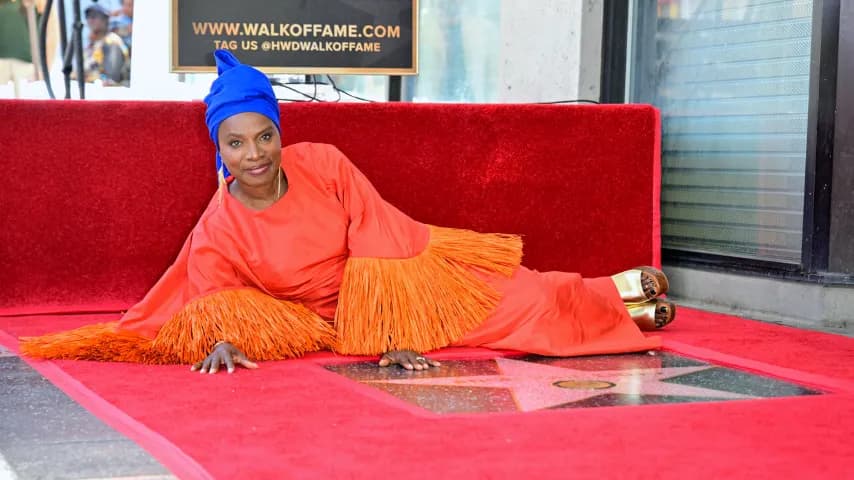
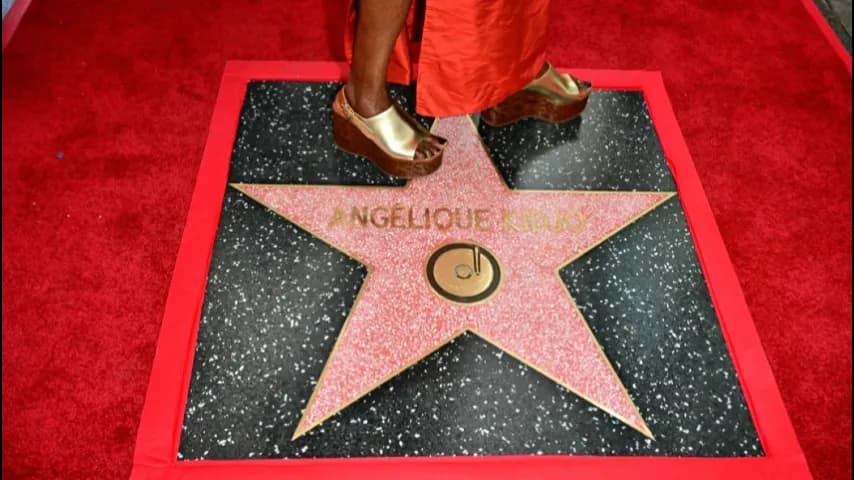
Yesterday, under the palm trees of Hollywood Boulevard, a 66-year-old woman from Benin walked up to a star on the ground the 2,854th star on the Hollywood Walk of Fame and saw her name on it.
Angélique Kidjo became the first Black African to be honored with a star on the Hollywood Walk of Fame. Five Grammys. Eighteen albums. Four decades of performing. And she is the first.
Not the first African woman. The first African. Period.
Let that take a moment to land.
Who is Angélique Kidjo and why does this matter?
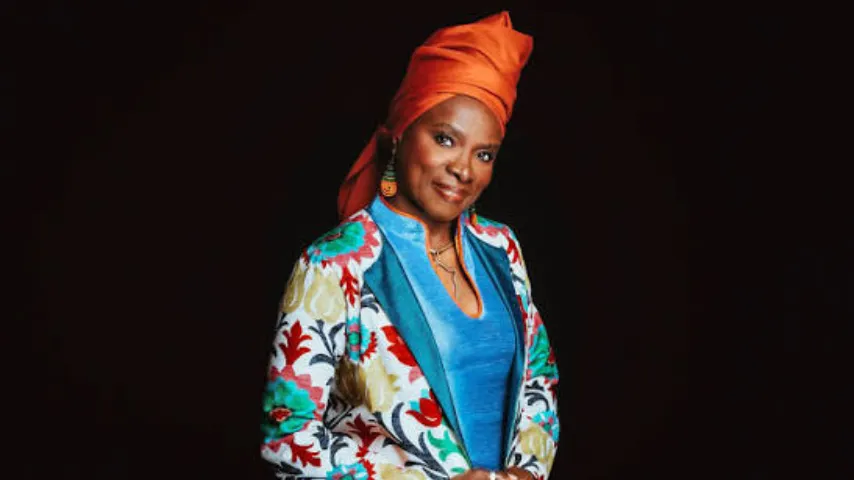
If you don't know Angélique Kidjo, you've been missing one of the most important voices in global music for forty years.
Born in Benin, she has built a career as a singer, songwriter, actress and activist that has spanned more than four decades. She has sold nearly four million albums worldwide and written a bestselling autobiography with a foreword by Desmond Tutu.
She has been named one of Time magazine's 100 most influential people in the world. The BBC listed her among Africa's 50 most iconic figures. The Guardian called her one of the 100 most inspiring people on the planet.
And yet until yesterday not a single African musician had a star on Hollywood Boulevard.
Not Miriam Makeba. Not Youssou N'Dour. Not Fela Kuti. Not Hugh Masekela. Not Salif Keita. Not Oliver Mtukudzi. Not a single one of the artists who shaped the DNA of global music from the African continent.
Angélique Kidjo is the first.
What she said yesterday.
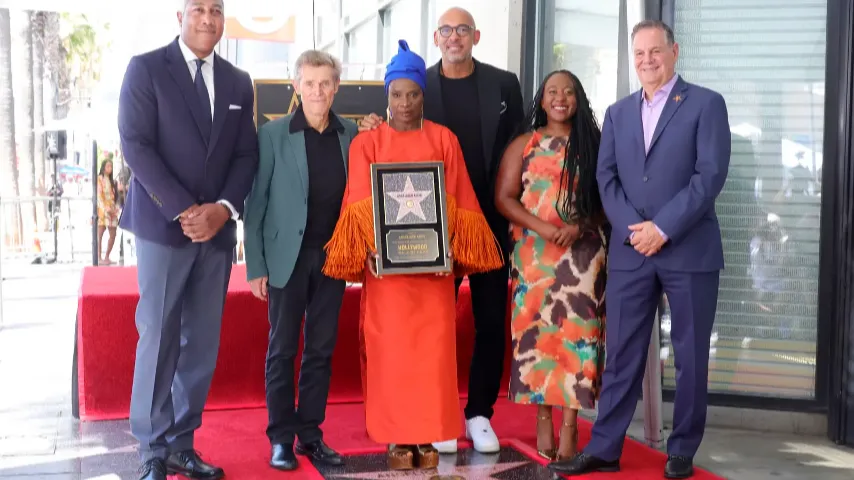
At the ceremony, surrounded by Willem Dafoe, Recording Academy CEO Harvey Mason Jr., Djimon Hounsou, and Nigerian star Adekunle Gold, Kidjo spoke.
And what she said was not a rehearsed acceptance speech. It was a declaration.
"We Africans don't know what we've given to the world. Without us, there's no music possible on this planet."
Then she erupted into song. In the middle of Hollywood Boulevard. Under the palm trees. In front of the cameras. Because that's who Angélique Kidjo is someone for whom music isn't a performance, it's a language she speaks when words aren't enough.
Willem Dafoe, who praised Kidjo at the ceremony, said she moves audiences, elevates them, and reminds them that they are all connected.
The 40-year journey Hollywood took its time to notice.
Kidjo left Benin for Paris in 1983 amid political repression. She arrived in Europe with her voice, her vision, and a musical tradition rooted in West African culture that she refused to abandon even as the industry pushed her toward more "marketable" sounds.
She pushed back. She always pushed back.
Her music has always been a bridge between Africa and the diaspora, between tradition and innovation, between languages (she sings in Fon, Yoruba, French, English, and more), between generations. She covered Talking Heads' "Once in a Lifetime" and made it more African than American. She reimagined Celia Cruz. She collaborated with Alicia Keys, Peter Gabriel, Carlos Santana, and Yemi Alade. She never stayed in one lane because she refused to accept that artists from Africa should have only one lane available to them.
Five Grammys later, Hollywood has finally caught up.
What this moment means beyond the star itself.
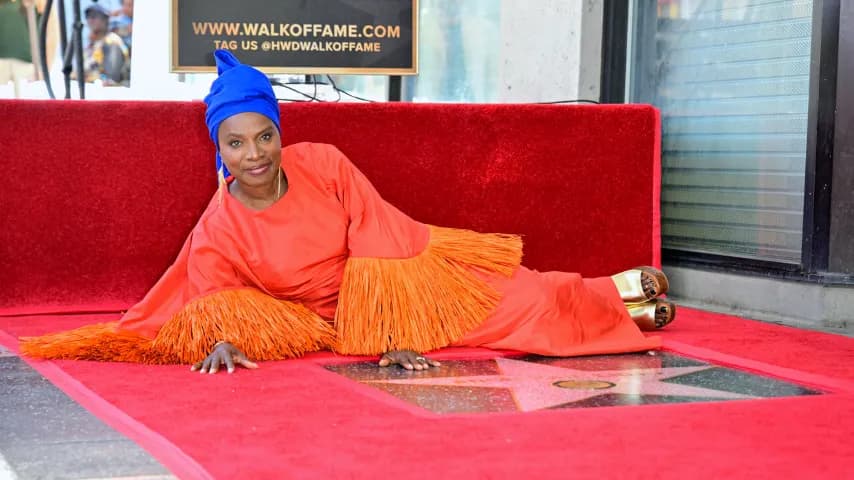
I want to be careful not to let the celebration obscure the question underneath it.
Why did it take this long?
The Hollywood Walk of Fame has existed since 1960. It has honored more than 2,800 entertainers. It has stars for musicians from every corner of the Western world. And it took sixty-six years and the persistent brilliance of one woman from Benin for a single African musician to be included.
When the honor was announced, Kidjo said: "I may be the first African female singer to have a star on the Hollywood Walk of Fame, but I am convinced I will not be the last."
That's the right framing. Not just celebration promise. Not just recognition responsibility.
Because if Angélique Kidjo is the door, then Burna Boy, Wizkid, Davido, Tems, Ayra Starr, Tyla an entire generation of African artists reshaping global music right now — are the ones who will walk through it.
The star on Hollywood Boulevard is beautiful. But its real meaning is what comes after it.
A personal note.
I've written a lot on this blog about representation. About who gets to be seen. About who gets to be celebrated on the world's biggest stages and who gets redirected to a "special category" or ignored altogether.
Angélique Kidjo's star on Hollywood Boulevard is, in one sense, the correction of a sixty-six-year oversight. In another sense, it's proof that excellence stubborn, relentless, unapologetic excellence eventually forces the world to pay attention.
She didn't change who she was to get there. She didn't soften her sound, simplify her language, or shrink her identity to make it more palatable for an industry that wasn't ready for her.
She just kept going. For forty years. Until they couldn't ignore her anymore.
That's the lesson. Not just for African artists. For anyone who has ever been told that who they are isn't enough for the rooms they're trying to enter.
Keep going. The room will catch up.
Congratulations, Angélique. The boulevard looks better with your name on it. 🌍
Christ-Yvan 🛶