Ariana Grande Was Never the Product. She Was the Prisoner.
Ariana Grande just dropped "Petal." And if you're not paying attention, you'll think it's just another pop song.
It's not. It's a confession, a middle finger, and a liberation all wrapped in a three-minute track with a music video that ends in a chainsaw massacre.
But to understand why "Petal" matters, you have to understand who Ariana Grande actually is. Not the version the industry sold you. The real one. The one who has been fighting to be heard as herself for over a decade.
The girl who wanted to make R&B.
Here's something most people don't know.
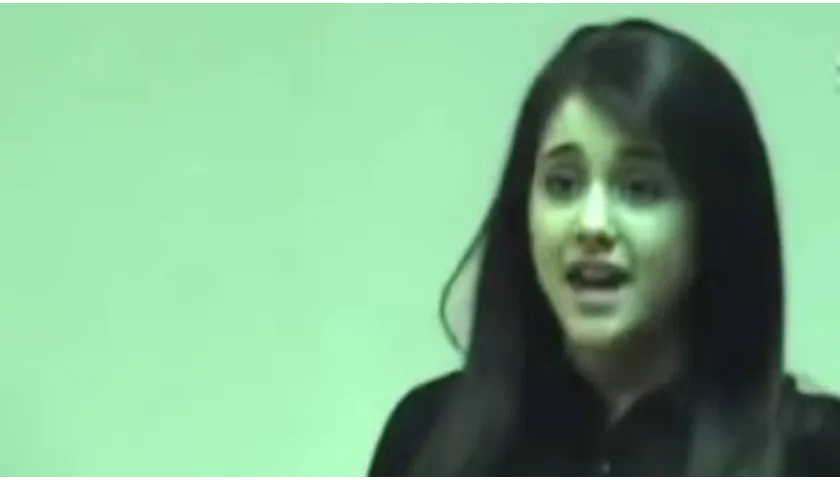
When Ariana Grande was 14 years old, she walked into a room and told her managers she was ready to make an R&B album. She wanted to work with India.Arie. She wanted sessions with Mary J. Blige and Natasha Bedingfield. Her vocal influences were Mariah Carey and Whitney Houston two of the greatest R&B vocalists in history.
And her managers laughed. Who would buy an R&B album from a 14-year-old Nickelodeon actress?
So they put her on a different path. Her first single, "Put Your Hearts Up," was a bubblegum pop track and she later said in an interview that she wished she had never recorded it because it wasn't the kind of music she wanted to make.
That pattern wanting one thing and being given another became the story of her entire career.
The Mariah comparison that became a cage.
From the moment she released "Yours Truly" in 2013, the world decided who Ariana Grande was supposed to be: the next Mariah Carey.
At first, she embraced it. "It's a massive compliment. She's the greatest singer in the world, literally in the Guinness Book of World Records," she told Rolling Stone.
But compliments become cages when they're the only thing people see.
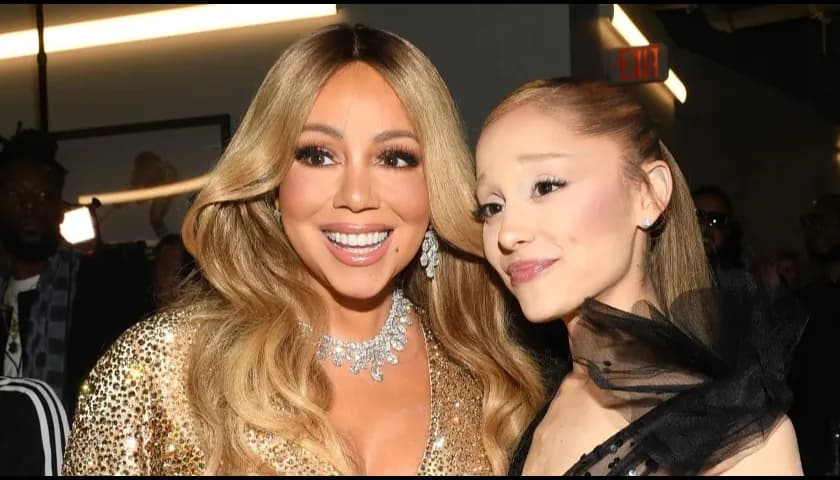
Mariah herself wasn't thrilled. In an interview, she famously said "I don't know her" a phrase that launched a thousand memes and turned what should have been admiration into a rivalry. Nick Cannon later explained that Mariah disliked anyone being called "the next Mariah" because, in her words, "I'm Mariah Carey, why do you need another one?"
And that's the trap. Ariana couldn't be Ariana. She could only be "the next someone else." Every review, every comparison, every headline it all pointed to someone she wasn't and never claimed to be.
The ponytail was never a fashion choice.
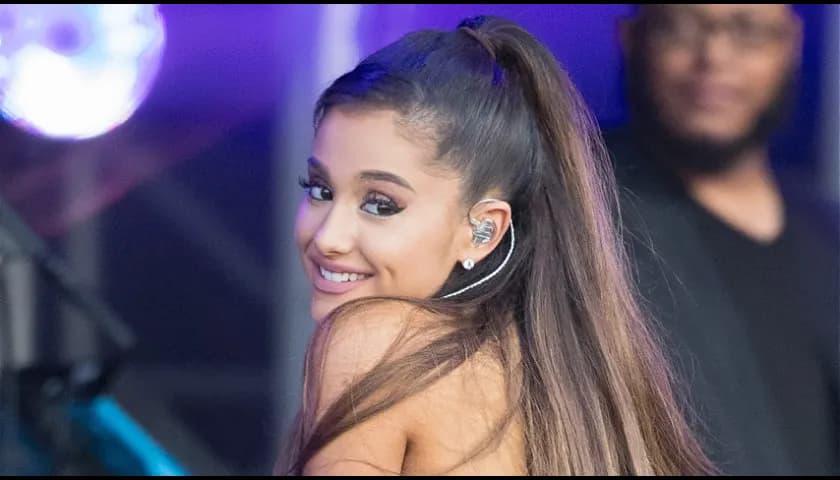
You see her iconic high ponytail and you think: style. Signature. Brand.
The truth is sadder.
While playing Cat Valentine on Nickelodeon's "Victorious," Ariana had to bleach and dye her hair bright red every other week for four years. The damage was catastrophic. Her natural curly hair was destroyed completely.
In 2014, she wrote on Facebook: "I had to bleach my hair and dye it red every other week for the first 4 years of playing Cat. As one would assume, that completely destroyed my hair. My real hair is back to brown and I wear extensions but I wear it in a ponytail because my actual hair is so broken that it looks absolutely ratchet and absurd when I let it down."
Her ponytail the thing the whole world associates with her — was born out of damage. Out of necessity. Out of something that was done to her, not something she chose.
And then the world turned that damage into her identity. And she was stuck with it.
She even admitted that the ponytail causes her "constant pain." When Camila Cabello tried the style and complained about it hurting, Ariana replied: "I'm in constant pain always and don't care at all."
Pain as a brand. Sound familiar?
The industry made her the product. She wanted to be the artist.
If you look at Ariana's discography carefully, you'll notice something. Most of her albums have two halves a pop side and an R&B side.
The pop side is what gets the radio play, the billions of streams, the chart positions. "Problem," "Bang Bang," "7 Rings," "Thank U, Next" the songs the industry wanted.
The R&B side is what she actually wanted to make. The deeper cuts. The songs where her voice breathes instead of belts. The tracks that sound like the album a 14-year-old girl dreamed of making before the machine told her no.
She said it herself in interviews there were albums where "they" made her the product on one half, and on the other half, they "let her do what she wanted."
Let her. As if making your own music is a privilege, not a right.
How can people think they know someone better than the person knows herself?
This is the question at the heart of everything.
The public decided Ariana Grande was a pop princess with a ponytail who dates famous men and makes catchy breakup anthems. That's the box. And every time she tried to step outside of it to make R&B, to change her look, to be more honest about her struggles she was criticized.
Too different. Not authentic. Not what we expect.
But how can millions of strangers think they know Ariana Grande better than Ariana Grande knows herself? How can people who have never met her, never been in the studio with her, never heard her speak about her art in private how can they tell her who she is?
That's not fandom. That's ownership. And "Petal" is her response to that.
The music video is a masterpiece of rage.
Let me break down what happens in the "Petal" video because every frame is intentional.
Ariana plays an actress named Pepper who goes from audition to audition, changing herself every time. New hair. New look. New attitude. She gives everything she has, and every time she's told the same thing: not good enough. Not authentic. Not right.
And here's the detail that destroys me: on the floor of each audition room, there's a flower growing through the cracks in the pavement next to a Hollywood star on the Walk of Fame. Each time she's rejected, a petal falls from that flower.
Each rejection strips a piece of her away.
She keeps going. She keeps trying. She keeps compromising changing herself to fit what they want. And the flower keeps dying, petal by petal, as she loses herself trying to please everyone.
Until she doesn't.
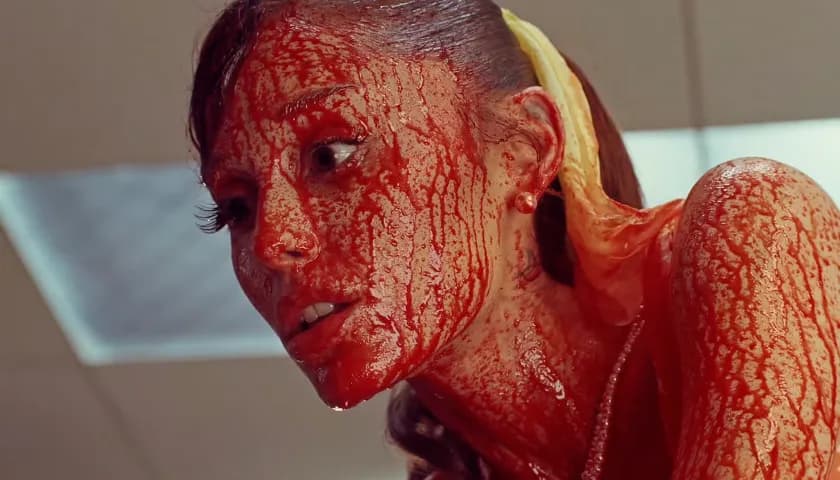
In the final scene, the men behind the table say something too harsh, too final and Pepper picks up a chainsaw. The scene that follows is bloody, violent, and cathartic. She emerges covered in red, and every woman who was waiting outside for her turn stands up and applauds.
The old flower the one that was dying trying to please the world is gone.
But right next to it, growing through the same crack in the same cold pavement, is a new one. Full. Alive. Untouched.
That's "Petal." The old Ariana the product, the ponytail, the comparison, the cage dies so the real one can finally bloom.
"I don't need someone to save me."
Throughout her career, Ariana's music was often about needing love, needing validation, needing someone to make her whole. "One Last Time." "Into You." "No Tears Left to Cry." Beautiful songs but always pointing outward. Always searching for salvation in someone else.
In "Petal," she sings: "All of my favorite stories end in some kind of catastrophe. But I don't need someone to save me. 'Cause this music and I will never die."
That line is the turning point of a career. Maybe even a life.
She's not asking for permission anymore. She's not trying to be the next anyone. She's not hiding behind a ponytail that hurts or a pop sound that sells.
She's just... her. For the first time, fully, unapologetically her.