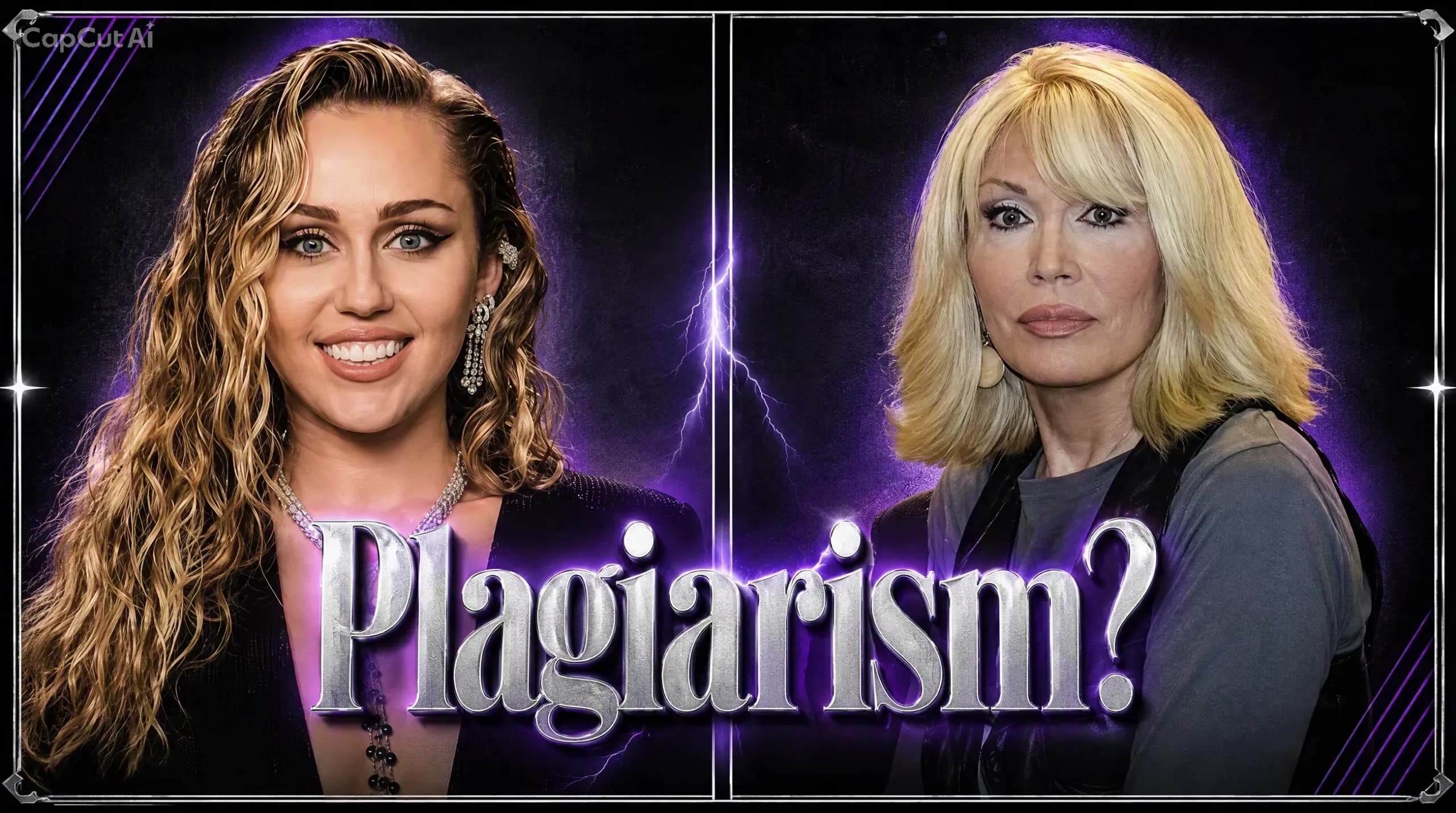
It's happening again.
This week, Amanda Lear the French disco icon who gave the world "The Sphinx" back in 1979 posted something on Instagram that the music world couldn't ignore.
"Thank you Miley for copying my song The Sphinx. I'm flattered."
The accusation? That Miley Cyrus's brand new single "Redlights" shares the same melody and rhythmic structure as a track recorded nearly 50 years ago. Amanda Lear added that she might pursue legal action or simply ask to be credited. She wasn't furious. She was almost gracious about it, which somehow made the whole thing hit harder.
And just like that, a conversation the music industry has been trying to avoid for years landed right back on the table.
Because this isn't the first time. Not even close.
We've been here before with Miley.

In 2023, Miley Cyrus released "Flowers." It became the best-selling single of that year. It topped the Billboard Hot 100 for eight weeks. It won her two Grammy Awards, including Record of the Year.
And within days of its release, the internet noticed something. The chord progression, the melodic structure, the lyrical DNA it all sounded strikingly familiar to Bruno Mars's "When I Was Your Man" from 2013.
Tempo Music Investments which owns a portion of the copyright to the Mars track filed a lawsuit in federal court in Los Angeles, claiming that "Flowers duplicates numerous melodic, harmonic, and lyrical elements" of the original song. The co-authors of "Flowers" denied copying it. The case wound its way through the legal system.
And now, before that chapter is fully closed, a new one opens. Amanda Lear. "The Sphinx." 1979.
So where exactly does inspiration end and theft begin?

This is the question nobody in the music industry wants to answer honestly because the honest answer is uncomfortable.
The truth is that almost all music borrows from what came before. Always has. Always will.