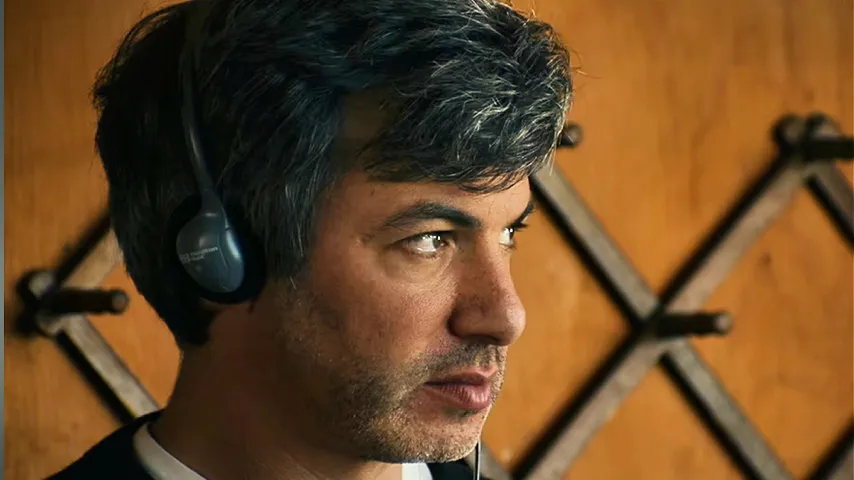
Few anticipated that the release of the You Can See Everything movie would turn into one of the year's most talked-about cinema events. Nathan Fielder's new film, co-directed alongside Lance Oppenheim, takes a puzzling look at former Theranos CEO Elizabeth Holmes and her partner Billy Evans before her prison sentence. Driven by intense word-of-mouth, the You Can See Everything box office has surged past sixty-three million dollars, demonstrating how the unique Nathan Fielder Elizabeth Holmes collaboration transformed audience curiosity into a major box-office triumph.
The Secret Production Behind Nathan Fielder's New Film
Nathan Fielder has long built a reputation on subverting expectations, but his latest experimental documentary takes narrative trickery to an entirely new level. The project was produced in near-total secrecy, with fewer than ten people at distributor A24 aware of its existence over several years. It was only when the three-hour film received a surprise unveiling at the Telluride Film Festival in early September that the wider film world learned what had been created.
The documentary follows Fielder and co-director Lance Oppenheim as they stay with Elizabeth Holmes and her partner Billy Evans in 2023, just before Holmes began serving her prison sentence for fraud convictions. While many felt the Theranos story had already been thoroughly covered in pop culture, the filmmakers approached it from an entirely unconventional angle. By embedding themselves in the household, they turned a familiar news story into an intriguing study of authenticity and manipulation.
This deceptive framing turned the viewing experience into a collective decoding process. Moviegoers walked into theaters expecting a standard non-fiction portrait, only to find themselves navigating an intricate meta-puzzle about performance and trust. By concealing the film's existence until the very last moment, the release strategy ensured that public curiosity would immediately flare into widespread fascination.
How You Can See Everything Conquered the Box Office
That intense intrigue translated into exceptional theater turnout, allowing an experimental non-fiction project to go head-to-head with traditional studio blockbusters. Over the Halloween weekend frame, the You Can See Everything box office reached an estimated 10.6 million to 10.8 million dollars across 3,243 theaters. This strong third-weekend performance put the documentary in a tight race for first place against Warner Bros.' DC comic book horror release Clayface, directed by James Watkins.
With a domestic total reaching roughly 64 million dollars, the success has marked a significant milestone for distributor A24. Industry reporting highlights that advance ticket sales from an older female audience consistently boosted the film's early hourly earnings. Driven by these impressive returns, A24 has officially crossed the half-billion-dollar mark in domestic box office earnings for the year, achieving the highest cumulative total in the studio's history.
What makes these box office returns so remarkable is how the film turns passive viewing into an active conversation. Theatrical screenings have functioned like communal gatherings where audience members assemble to debate which moments are real and which were carefully staged. Far from being turned off by the long three-hour runtime, moviegoers continue to flock to theaters to participate in the spectacle.
The Ethical Boundary Lines of Nathan Fielder Elizabeth Holmes Projects
The fascination surrounding the project has only expanded as real-world controversies over its content emerge in news outlets. One of the most discussed sequences in the movie features a full-frontal shower scene involving Elizabeth Holmes' partner, Billy Evans. The inclusion of this moment has sparked a sharp public disagreement between the filmmakers and representatives for the subject, echoing the movie's core themes of deception and trust.
Co-director Lance Oppenheim explained in an interview that the unclad scene was actually Evans' own suggestion after returning from a trip to the gym. Oppenheim stated that he offered to frame the camera to obscure Evans' genitals, but Evans insisted he did not mind being filmed naked. However, a source close to Evans told People magazine a very different story, asserting that Evans only agreed to be filmed with the understanding that the scene would remain PG.
According to that source, discovering the full-frontal footage through media reports was deeply unsettling for Evans, who felt it represented a violation of trust and exploitation for shock value. This public dispute leaves audiences grappling with another layer of mystery. It remains difficult to determine whether the conflict is a genuine breach of ethics or yet another element of the film's surrounding meta-narrative.
International Release Delays and the Spread of Cinema FOMO
While North American audiences debate the film's moral boundaries, moviegoers in international markets face an agonizing wait due to a staggered release strategy. Because the project was kept secret until Telluride, A24 was unable to finalize global distribution arrangements in advance. Consequently, the film initially opened officially only in Turkey, leaving fans in other territories desperate to avoid online spoilers while waiting weeks or months for local screenings.
This delay has sparked widespread frustration across social media, where viral posts and memes have labeled the project You Can't See Anything. Cinephiles in Australia must wait until November 12, UK audiences until November 20, and viewers in France until December 30. Some dedicated fans have taken extreme measures; for instance, a couple living in Berlin drove two hours to Szczecin, Poland, just to catch a preview screening with Polish subtitles before driving back to discuss the film's twists.
This intense demand demonstrates how completely the project has captured the cultural zeitgeist. Foreign viewers have resorted to muting keywords on social platforms and closing their eyes while scrolling to avoid spoilers. The film has proven that an experimental docu-fiction project can generate the kind of passionate global anticipation typically reserved for major franchise tentpoles.
The Lasting Impact of Fielder's Collaborative Meta-Puzzle
Ultimately, the phenomenon surrounding Nathan Fielder's latest project highlights a shifting dynamic in how audiences engage with modern cinema. By blurring the lines between documentary reality, staged performance, and off-screen drama, the film transforms a standard theater visit into an evolving interactive mystery. Spectators are not merely watching a narrative; they are actively piecing together a puzzle that stretches beyond the screen into real-life news coverage.
As the film continues its impressive theatrical run, it opens up a broader conversation about the future of non-fiction storytelling. By converting audience skepticism into a collaborative experience, the filmmakers have shown that viewers are eager for cinema that challenges their perception of truth. It remains to be seen whether this interactive meta-approach will inspire a new wave of experimental documentaries or stand as a singular box-office anomaly.
Sources: Deadline, DC Comics, yahoo.com, cnn.com
— christyvan 🛶